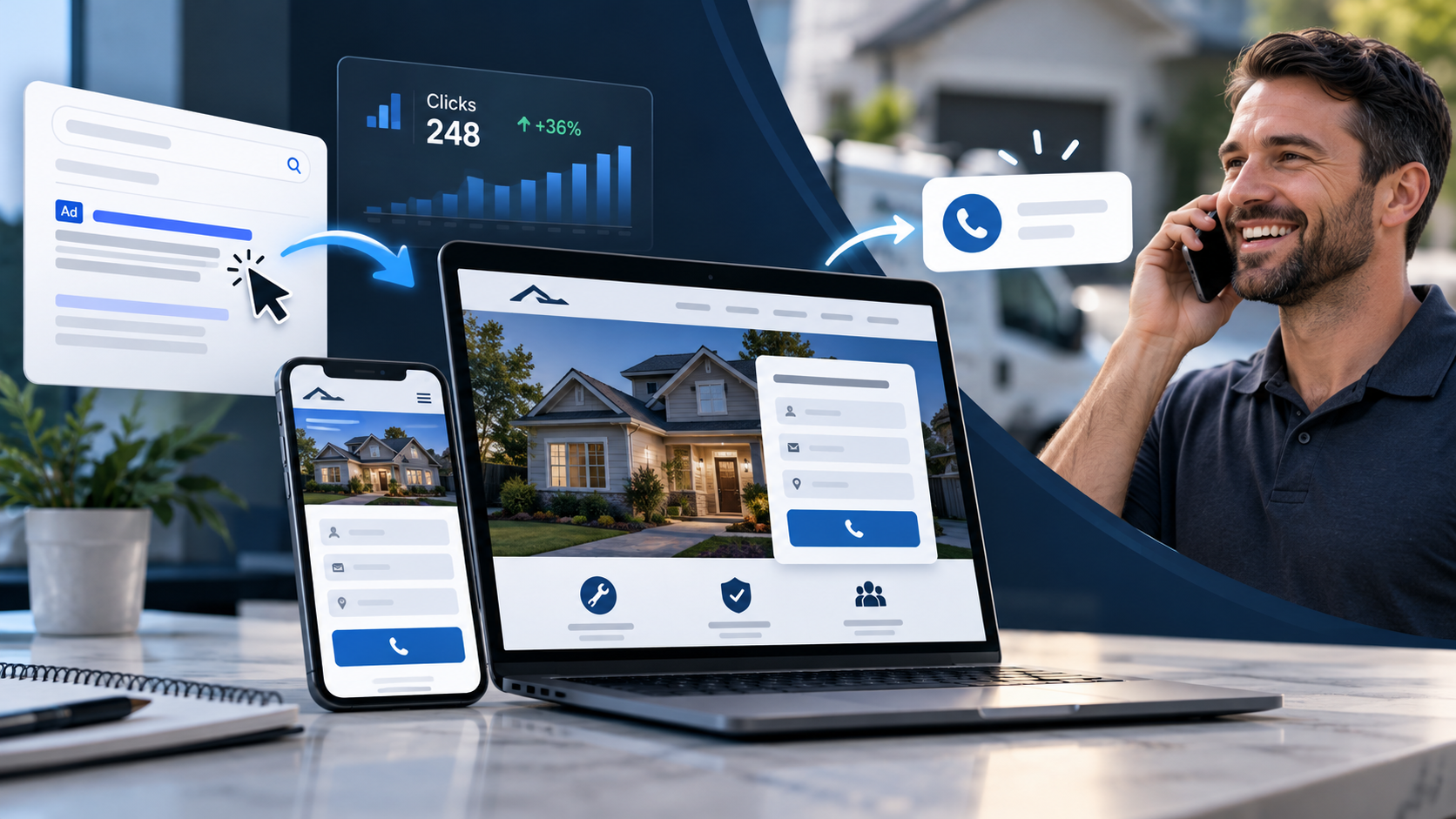
Getting Clicks Is Only Half the Job
Think about why someone clicks a Google Ad in the first place.
Maybe a homeowner needs a tree removed. They search Google, see an ad for a local tree company, and click because it looks like the company can help.
So far, everything is going well.
But then they reach a website that talks about ten different services. They have to scroll to find tree removal. They aren't sure if the company serves their area. The phone number is hard to find.
What do you think that homeowner might do?
They could keep looking and call another company.
You still paid for that first click. But the visitor never became a lead.
Now imagine that happening over and over. Your advertising bill keeps growing, but your calls don't grow with it.
That's why getting more traffic isn't always the answer. You also need to pay attention to what happens to the traffic you already have.
The page they reach is called your Google Ads landing page. Its job is to help an interested person decide whether to contact you.
Why Spending More Money May Not Fix It
When Google Ads aren't bringing in enough leads, there are a few common things business owners try.
Increase the budget.
More money can bring more visitors. But if people are already leaving your website without calling, sending more visitors to that same page may only increase your costs.
Change the ads.
Better ads can help attract people who need your service. But even a well-written ad can't fix a page that leaves visitors confused about what to do next.
Send everyone to the homepage.
Your homepage might explain your business well. But someone searching for one specific service may not want to sort through everything else you offer just to find it.
None of these choices is always wrong.
The problem is making changes before finding out why people aren't contacting you.
Sometimes the issue really is the ad, the keywords, or the people being reached. Other times, it's what happens after the click.
You need to know which problem you're trying to fix.
Your Ad and Your Website Need to Tell the Same Story
Let's say someone searches Google for emergency tree removal.
They see your ad promising help with emergency tree removal in their area. When they click, they expect to find exactly that.
A good Google Ads landing page should carry that same message forward.
The visitor should quickly see that you offer the service they need, work in their area, and have a clear way for them to contact you.
You don't need a long speech about your company's history before explaining what you can do for them.
Start with the reason they clicked.
For example, a page for emergency tree removal could explain what types of urgent tree problems the company handles, which areas it serves, and how to request help.
That makes it easier for someone to decide whether they're in the right place.
The less searching your visitor has to do, the easier it is for them to take the next step.
Google also offers guidance on making landing pages more useful for people who click ads.
Make It Easy for People to Contact You
Getting someone to the right page matters. But they still need an easy way to reach you.
Imagine a homeowner standing in their yard with a damaged tree. They're looking for someone who can give them an estimate.
They probably don't want to fill out a long form asking for information that has nothing to do with their problem.
They want to know whether you can help and how to get in touch.
A Google Ads landing page doesn't need fancy animations or a complicated design.
It needs a few basic things that work well:
- A clear headline explaining the service.
- A phone number or call button that's easy to find.
- A short form for requesting an estimate.
- Real photos or reviews that help build trust.
- Clear information about the areas you serve.
- A page that works properly on a mobile phone.
Those things may sound simple, but they're important.
If someone wants to call your business, don't make them search for your number.
If they want an estimate, make it clear how they can request one.
And if you want them to fill out a form, only ask for the information you actually need to start the conversation.
Know Whether Your Clicks Are Becoming Real Leads
There's one more part of this that matters.
You need to know what people are doing after they reach your page.
Google Ads can track actions like form submissions and certain phone calls when the right tracking is set up.
This helps you see more than just how many people clicked.
For example, you might learn that one ad brings plenty of visitors but very few inquiries. Another might bring fewer visitors but more calls from people looking for the work you actually offer.
That information can help you decide where your money should go.
But remember that not every inquiry is a good lead.
A tree company that only wants large removal jobs probably doesn't want to spend its whole day answering requests for small landscaping projects.
The goal isn't just getting more leads. It's getting inquiries from people who may actually need and hire your business.
That means paying attention to the calls and requests coming in, not just the numbers inside your advertising account.
Before You Spend More, Try This Simple Test
Open your Google Ads landing page on your phone.
Pretend you're a customer who has never heard of your company.
Look at the page for a few seconds and ask yourself:
- Can I tell what this business does?
- Can I tell whether it serves my area?
- Can I see a reason to trust it?
- Can I easily call or request an estimate?
- Does the page match what the ad promised?
If you struggle to answer those questions, a visitor might struggle too.
Fix the most obvious problems first. Then watch whether more of your visitors begin contacting you.
And if your page already answers those questions well, look closer at your ads, search terms, and location settings. The page isn't always the source of the problem.
The Bottom Line
Google Ads can help put your business in front of people looking for the services you offer.
But getting someone to click is only the beginning.
Your website needs to pick up where your ad leaves off, answer the questions that matter, and give visitors a simple way to contact you.
Before spending more money to get more traffic, make sure you're giving the traffic you already have a fair chance to turn into business.
At DeVoy Marketing, we look beyond the ads themselves. We also look at the page visitors reach, how they contact your business, and how those inquiries are tracked.
If you're paying for clicks but aren't seeing enough useful inquiries, take a look at our Google Ads setup and management service to see how we approach the full process.