
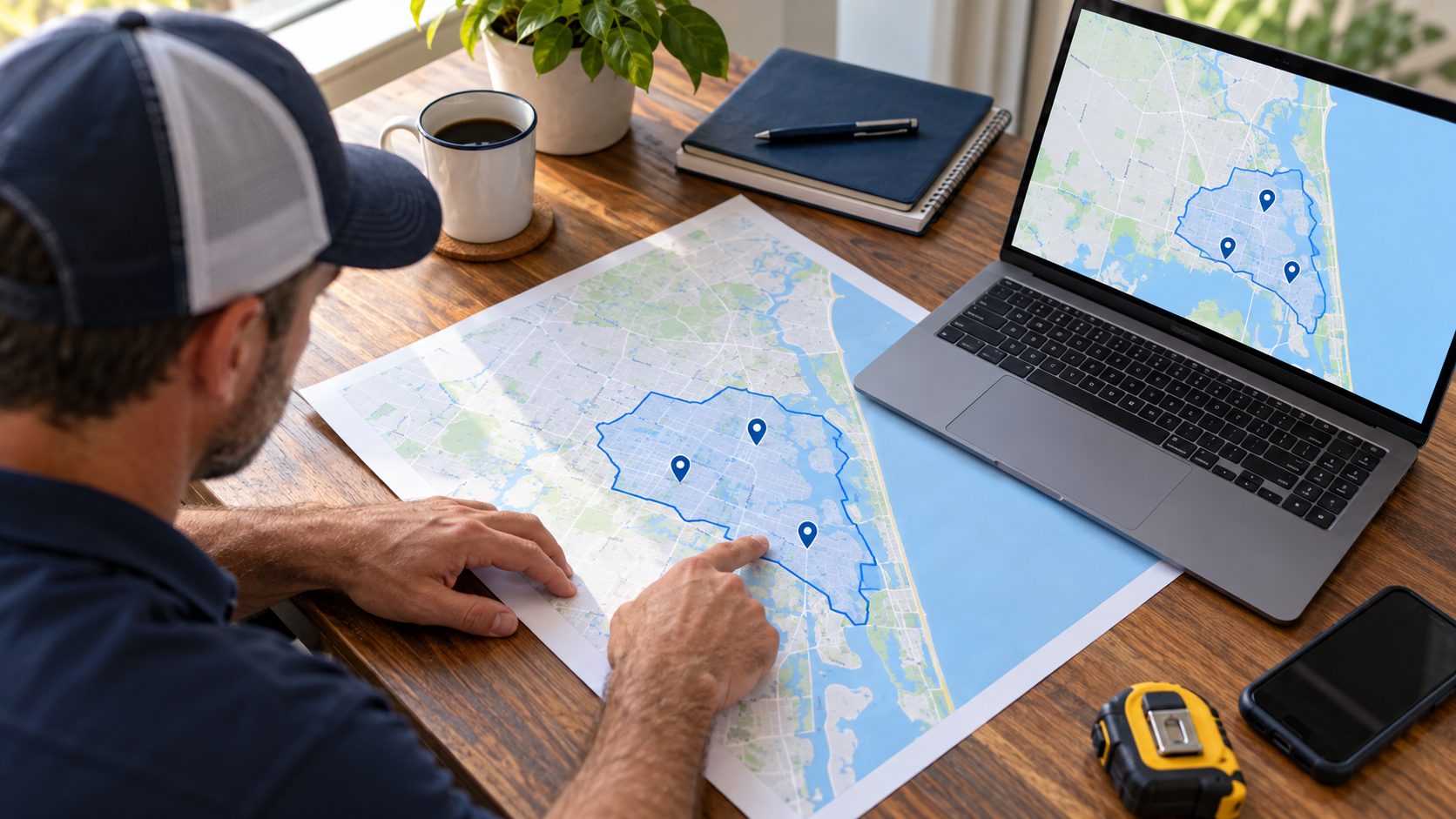
Google Business Profile service areas should reflect where you actually work
Your service area tells customers where you travel to provide your services. That makes it worth getting right. Someone looking for a plumber or cleaning company needs to know whether you’ll come to their property.
Google’s service-area guidance allows up to 20 areas, such as cities or postal codes. It recommends specific, accurate boundaries generally within about two hours of driving from your base.
Those are limits and guidelines, not targets to fill. If five nearby areas describe your operation accurately, there’s no business reason to add fifteen more just to use every slot.
A city list doesn’t replace the work behind local rankings
Google describes local ranking in terms of relevance, distance, and prominence. In plain language: how well your business fits the search, how far away it is, and how well known it is.
Adding a service area doesn’t create a new business location in that city. It also doesn’t guarantee that customers searching there will see you ahead of closer or more established competitors.
This is why I’m in favor of a focused local SEO plan. Accurate settings help describe your business. They don’t remove the need for clear service information, a useful website, and a credible reputation.
For Google’s explanation, see its guide to improving local rankings.
Choose territory based on the jobs you want to take
Picture a hypothetical pressure washing business based in Port Charlotte. It regularly accepts work in Punta Gorda and North Port, but a small job in Naples would leave too little margin after travel.
Listing every city down the coast might make its territory look impressive. It won’t make that trip profitable or establish a local presence in each place.
Start with where you can reliably take work. Consider travel time, minimum job size, scheduling, and whether your team can deliver the same service there. Your profile should support those decisions.
Make your profile and website explain the same business
Once your Google Business Profile service areas are accurate, check the rest of the customer’s path:
- Choose the primary category that best describes your main business.
- List the services you actually provide and keep your hours and phone number current.
- Make those services easy to find on your website.
- Show real work and ask customers for honest reviews without incentives.
- Give visitors a clear way to call or request an estimate.
If a customer finds you for paver sealing, the page they reach should explain paver sealing. A vague homepage that makes them hunt for the service creates unnecessary friction.
If your listing itself seems missing, start with these checks for a verified profile that isn’t showing before treating it as a service-area issue.
Build location pages only when you have something useful to say
A dedicated page can help prospective customers understand the service you offer in a particular area. I support that approach when the page earns its place on the website.
Explain the work, show relevant projects when you have them, describe actual coverage, and answer questions that affect hiring. Use real local details you can substantiate.
Copying one page and swapping Port Charlotte for North Port adds little value. Don’t invent a local office, project, or testimonial to make the page look more established.
A useful page may compete in organic search. It doesn’t automatically move your Business Profile into that city’s map results. Evaluate those two forms of visibility separately.
Check visibility across the territory before expanding it
A search from your own phone is one view from one location. It won’t tell you what every potential customer sees.
A local ranking grid can sample results for a specific search across several points. Compare the same phrase, locations, and grid settings over time. Treat it as a snapshot, then compare it with actual inquiries and booked work.
Start with the service and territory most worth winning. If you can’t explain where you’re visible now, adding more cities gives you more assumptions to work with.
Set a realistic service area. Build a stronger presence there.
I’m firmly in favor of accurate Google Business Profile service areas and focused local SEO. Give customers a truthful picture of where you work, then improve the information and evidence they use to choose you.
DeVoy Marketing helps service businesses review their profiles, websites, and local visibility so the next step follows the actual problem.